


My Malgudi Days …..
The mango season always cast a spell over my childhood, a time when the simple geography of a backyard determined the entire trajectory of a summer. I remember my uncle’s house with a clarity that feels like a physical ache; it was there, during the long summer recesses, that a single mango tree became the epicenter of my universe. To my cousins and me, that tree was far more than a source of fruit; it was a silent, gnarled comrade that held a spot of deep nostalgia for our beloved games of hide-and-seek. I would press my sweaty back against its rough, cool bark, holding my breath and praying the deep green canopy would shield me from discovery. It was a sanctuary where the air always smelled of dry earth and ripening resin.
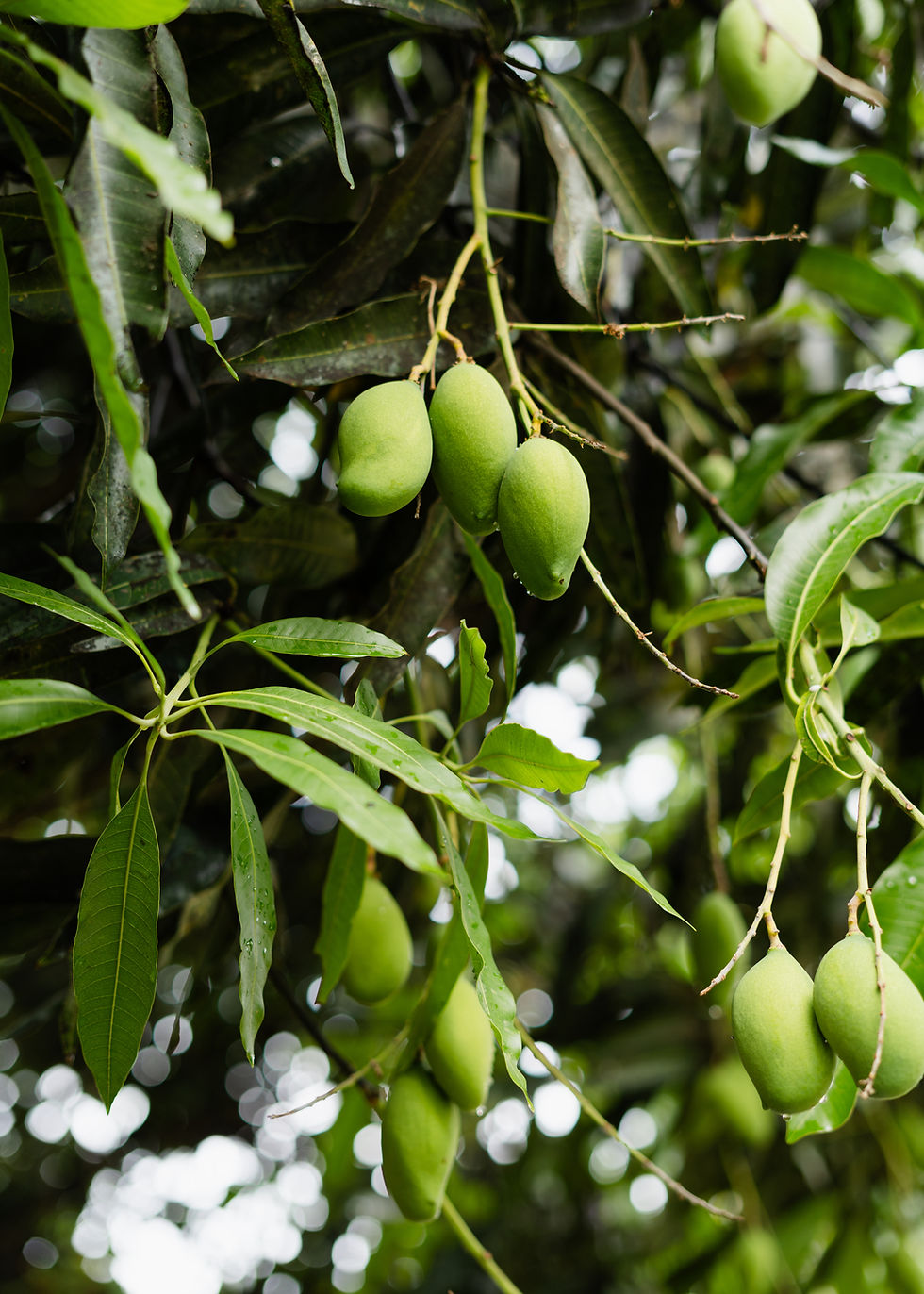
We never cared for the prestigious varieties that adults discussed with such gravity; for us, the small, nameless baubles were the ultimate prize. We were architects of our own impatience, plucking the fruit long before it reached its prime. It was then that the wisdom of my ailing grandparents would drift from the porch, reminding me of the "paal"—the literal milk or white sap that hisses from the stem of a young mango. They spoke of it with a kind of backyard reverence, warning that this liquid was the fruit’s way of fighting back, capable of stinging the lips or marking the skin.
Following their timeless instructions, I would perform a primitive, beautiful alchemy. I would take the freshly plucked mango and search for a scorched surface—a sun-baked stone or a patch of concrete that had been drinking in the afternoon heat—and rub the stem-end vigorously against it. This ritual of friction and heat was our way of drawing out the "sting" of the sap, a necessary tempering before the feast. Only after this cleansing did the fruit receive its "great apparel": a crude, vibrant mixture of crystalline salt and fiery red chili powder.
I can still feel the grit of that mixture on my orange-stained fingers. That first bite was always a sensory explosion—a violent collision of cheek-puckering sourness, the bite of salt, and the slow burn of chili. We would sit in the dappled shade, sharing a dented plate, oblivious to the world beyond of the garden gates. Looking back, those moments were an initiation into a specific kind of joy, one that didn't require perfection, only the company of family and the sharp, beautiful bite of a summer that felt like it would last forever. The "paal" has long since dried and the games have ended, but the geography of that backyard remains etched in my heart, seasoned forever with salt, spice, and memory.
In these last few years from 2020 i have grown closer to mangoes much more closer than ever before, as Farmlore brought in a sanity of I have understood times, understood on walks around the farm and felt that few varieties draws pollinators, bees throng on Malika and the the flowers and cluster blooming invariably depends on the mango showers , the appeal of wind and the direction of the wind , to how it contributes to the tangling lives of the tiny mangoes which literally hangs in the balance of natures mercy.

I looked at 3 trucks of mangoes set out to the neighbouring market after we had abundance stashed for our consumption for the next three months, the tiny fallen ones were also kept brined and salted for various other interpretations of the menu, but all this was for the year 2025 which was considerably a good year in terms of harvest.
But, 2026 had a different predicament, the hale had its say and it felt like stinging bullets as it pelted down raining by mid March and aftermath was considerably more sort of wounded soldiers in a battle field, the mango harvest was erased for the season and we have to rely on the neighbouring farms as the catastrophe of hale was limited to the unlucky square kilometres of our farm.
In these last few years, from 2020, I have grown closer to mangoes—much closer than ever before. I have understood the times; I have understood, on walks around the farm, that a few varieties draw pollinators—bees throng on the Mallika—and that the flowers and cluster blooming invariably depend on the mango showers. I have felt the appeal of the wind and the direction of the wind, and how it contributes to the tangling lives of the tiny mangoes, which literally hang in the balance of nature's mercy.
I looked at three trucks of mangoes set out to the neighboring market after we had an abundance stashed for our consumption for the next three months. The tiny, fallen ones were also kept, brined and salted for various other interpretations of the menu—but all this was for the year 2025, which was a considerably good year in terms of harvest.
But 2026 had a different predicament. The hail had its say, and it felt like stinging bullets as it pelted down, raining by mid-March. The aftermath was considerably more like wounded soldiers on a battlefield; the mango harvest was erased for the season, and we have to rely on the neighboring farms, as the catastrophe of hail was limited to the unlucky square kilometers of our farm.
Mangoes on a menu followed a pattern; for years, whenever I envisioned them, it was merely as desserts. When raw, they were engineered around salads and sorbets; occasionally, they would linger to impart sourness to acclaimed stews, systematically pairing with and leaning towards seafood. As the traditional cuisines of the South rely heavily on the sour-note characteristics of a mango, it is always seen as a substitute for tamarind or, in some notable cases, even the tomato—which was, arguably, a late addition.
The nostalgia quotient is an endless supply of mainstream nourishment, from Aam Ras to Alleppey fish curries, where a mango would be grated in equal parts with coconut and ginger to embed a concoction.
What’s next ?
Malgudi days ( It’s been my dream to envision a menu on this cult classic the Lore is almost but set)

Comments