


Eid - A Catechism
A fascinating pivot from sacristy to a professional kitchen, As someone who grew up in St.Thomas Mount with a structure of Catechism and a rhythm of liturgy - Abraham and Issac stories of Old Testament which is the cornerstone of the sacrifice of Eid is nuanced to precision for the understanding of the word religion for me.
Grades from 5th to 10th at a Irish brother run school ( St Patricks ) in India taught me the ideology appreciating and celebrating festivals from all walks of life,
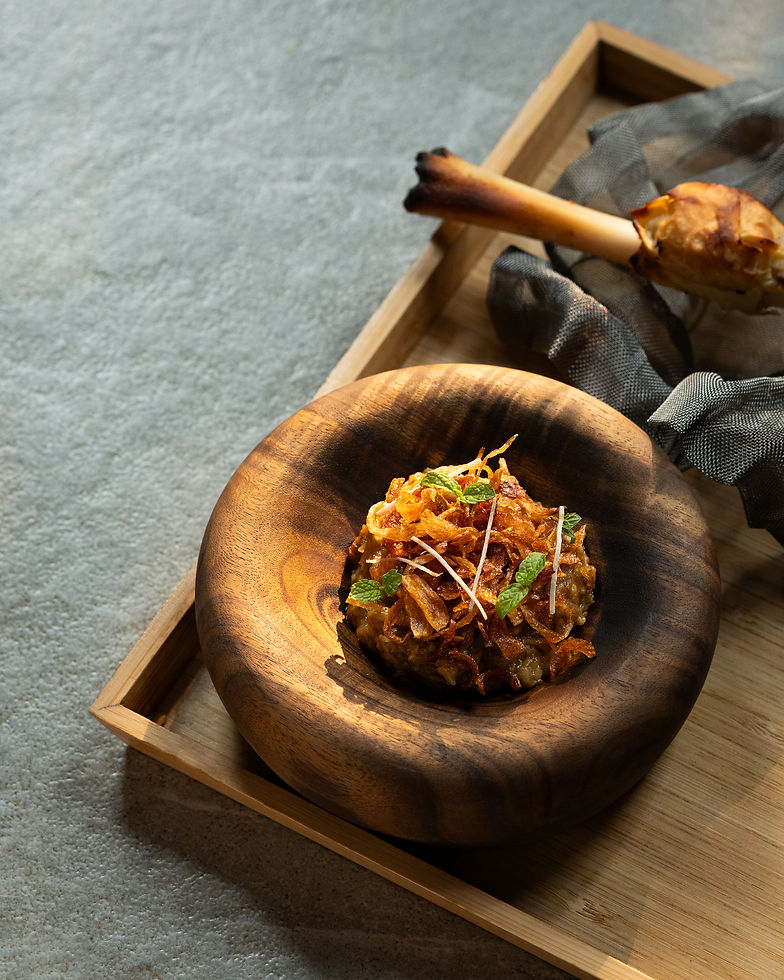
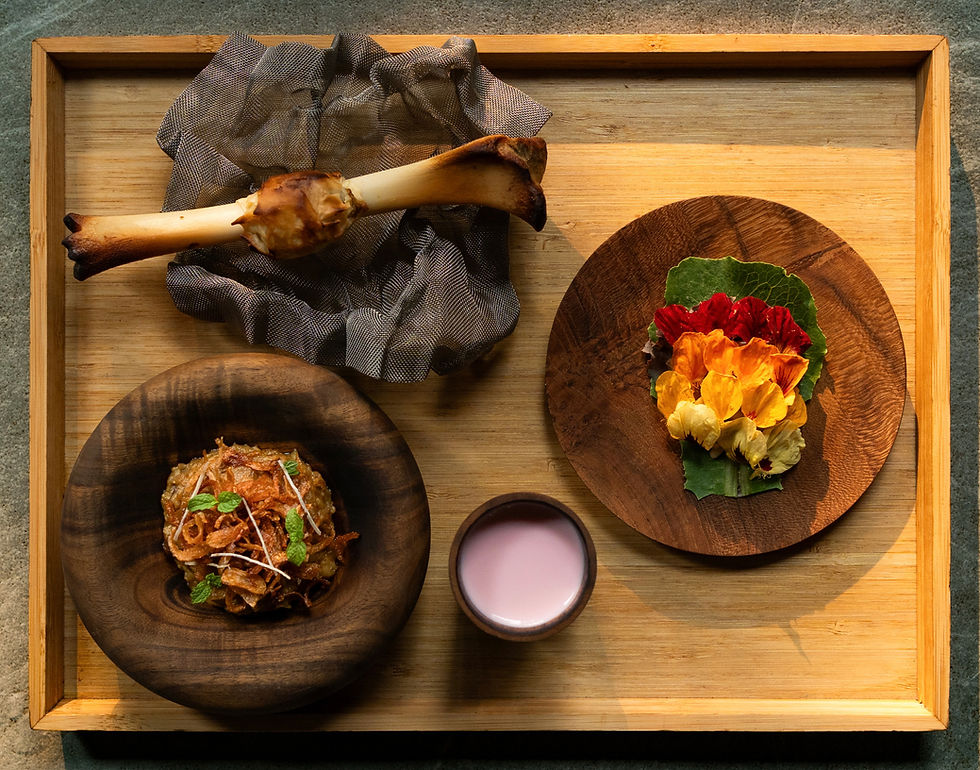
The idea of serving the first course as “ Break the Fast” with Rose milk as a drink, a salad on the lines of Fattoush but with Nasturtium dates and pine nuts , A samsa flaky pastry cooked over a lamb bone and a Haleem which is the porridge of broken wheat and richness of lamb
The Pass is my Altar,
The transition from the hushed sacristy of my youth to the controlled chaos of a professional kitchen was less of a pivot and more of a translation. In the shadow of St. Thomas Mount, life was measured in the steady rhythm of liturgy and the structured discipline of Catechism. It was there that I first understood that rituals—whether performed at an altar or a pass—are the anchors of human connection.
The stories of the Old Testament, specifically the profound narrative of Abraham and Isaac,formed my earliest understanding of the word "religion." It wasn't just about dogma; it was about the precision of sacrifice and the gravity of a shared meal. This understanding was further nuanced by my years at St. Patrick’s,where the Irish Brothers taught us a singular ideology: that to truly celebrate a festival is to honor the lived experience of the people beside you.
The Architecture of the "Break"
In my kitchen, we treat storytelling as the primary ingredient. For our “Break the Fast”course, the goal was to create a liturgy of flavors that respects the endurance of the fast while celebrating the richness of the feast. This wasn't a solo effort; it was a conversation between memories.
The Soul of Madurai: Arsh’s Haleem
To get the Haleem right , I looked to Arsh Sherif,Born and raised in Madurai,Arsh has an innate knack for bringing out the "soul" of the food he grew up with. For him, Haleem isn't just a dish; it’s a childhood rhythm. He understands the exact point where the broken wheat must surrender to the lamb, creating a porridge so rich and velvety it feels like a homecoming. It is his cultural compass that ensures our version remains an authentic testament to the Silk Road traditions he carries in his bones.
The Uncanny Spark: Avinnash’s Samsa
Then there is Avinnash Vishaal whose mind often finds the "uncanny" path to a classic. While we discussed the traditional Samsa, Avinnash proposed an idea that only he would—cooking the flaky pastry directly over a lamb bone, By using the bone as a conductor for the wood-fire heat, the pastry doesn't just crisp; it absorbs the rendered fat and marrow essence from within. It’s a technical marvel that tastes like ancient smoke and modern ingenuity.
The Sensory Narrative
The course begins with a chilled rose milk, a cooling benediction that serves as the sensory equivalent of a deep breath. We follow this with a Nasturtium Fattoush, where the peppery bite of garden-fresh nasturtiums and the crunch of pine nuts meet the deep, honeyed sweetness of dates,
At the heart of it all is the flame. Whether it’s the slow-simmered patience of Arsh’s Haleem or the bone-charred layers of Avinnash’s Samsa, the fire is what binds these stories together.
Growing up near the wood depots of Chennai, I learned that wood and fire define our narrative. Today, as we plate this course, the boundaries between the sacristy and the kitchen disappear. It is no longer just a meal; it is a shared story of sacrifice, community, and the beauty of the break be it Lent or the fasting of Ramadan, there is

Comments