


An Oyster Ballad !
My journey with the oyster began not as a gourmet indulgence, but as a grueling rite of passage at sea. During my tenure on cruise ships, I lived through the ordeal of shucking for thousands, a relentless rhythm of steel against shell that taught me more about the anatomy of flavor than any textbook ever could. It was in those galleys that I learned to respect how a single product of nature could span the entire culinary spectrum. I watched—and tasted—as they were transformed from the bracing simplicity of a raw squeeze of lemon to the heavy, saffron-scented complexity of a rouille sauce. That repetition grounded me; it stripped away the pretense of fine dining and forced me to appreciate the mollusk in its most primal, unadorned state.
That appreciation deepened into something more permanent when I found my "dwelling" in Knysna, South Africa. There, the oyster isn't just an appetizer; it’s a character in the landscape. I remember the Knysna oysters for their remarkable creaminess, a byproduct of the unique estuary where the salt of the Indian Ocean meets the fresh tannins of the Garden Route’s rivers. Whether it was the cultivated varieties or the rugged, metallic intensity of a wild oyster plucked straight from the coastal rocks, the experience was visceral. It felt less like a meal and more like an immersion into the very water I was looking at, a reminder that the best produce needs very little help from a chef to be perfect.
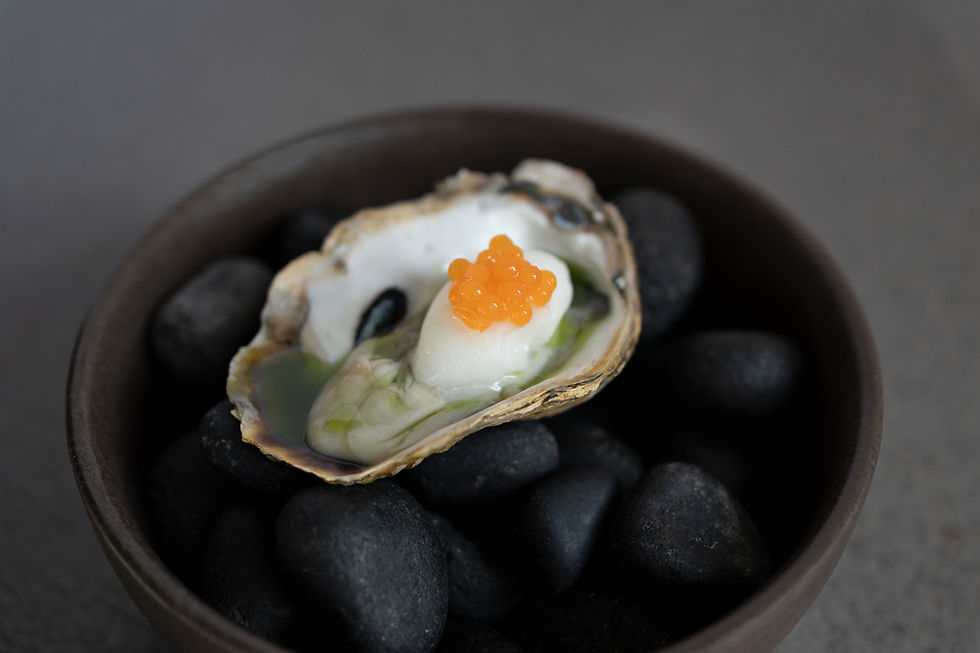
Then there was Bordeaux—a brief, bright moment in my memory that served as the sophisticated counterpoint to my years of labor. In the shadow of the world’s most famous vineyards, I sat before a seafood spread that felt like a quiet celebration of the Atlantic. Unlike the high-pressure production line of the cruise ship, my time in Bordeaux was about the pause. It was about the elegance of the Bassin d’Arcachon catch, served perhaps with a bit of spicy sausage or a crisp white wine that mirrored the salinity of the sea. It was refined, yes, but it never lost that raw, honest connection to the tide.
Coming back to the waters closer to home, I remember the first time I laid hands on the oysters of Kochi. They were robust, possessing a physical presence and a deep, earthy brine that stood in total opposition to the delicate Fin de Claire. I would later experience that refined, European profile again at the hands of Chef Darren Chin in Malaysia—oysters so nuanced that I eventually found myself serving them during my time at Nadodi. But Kochi remained the outlier. Even when I looked toward Pulicat Lake in Chennai, I found the harvest there unconvincing, lacking the character I had come to expect. There is something undeniably special about the backwaters of Kochi; I often wonder if it is the influence of the coconut trees leaning over those estuaries, or perhaps just the sheer untouched nature of the habitat from which they are pulled.
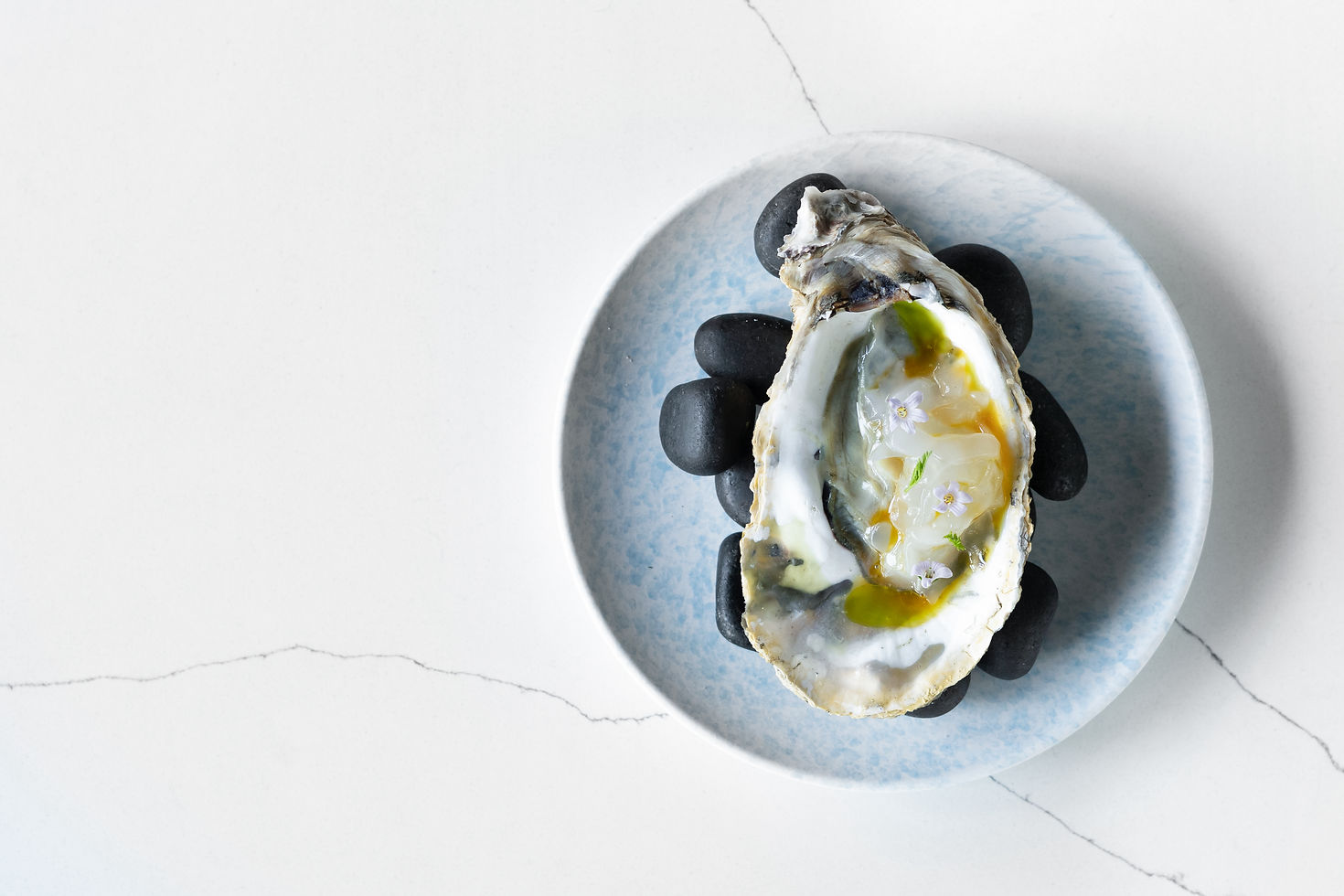
This fascination with the oyster's versatility led me to push the boundaries of its form. I began experimenting with countless iterations, pairing them with the tartness of Karonda berries or the deep, astringent sweetness of Jamun. I moved into earthier territory, baking them with the nutty, bitter-edged crunch of uchellu. However, the most immaculate of these offerings emerged from a period of creative tension. While working in the specialty restaurant at Regent Seven Seas, I served an iteration of Oyster Rockefeller that I eventually viewed as a creative bottleneck. I was searching for a way to strike a better balance, to move beyond the traditional without losing the soul of the ingredient.
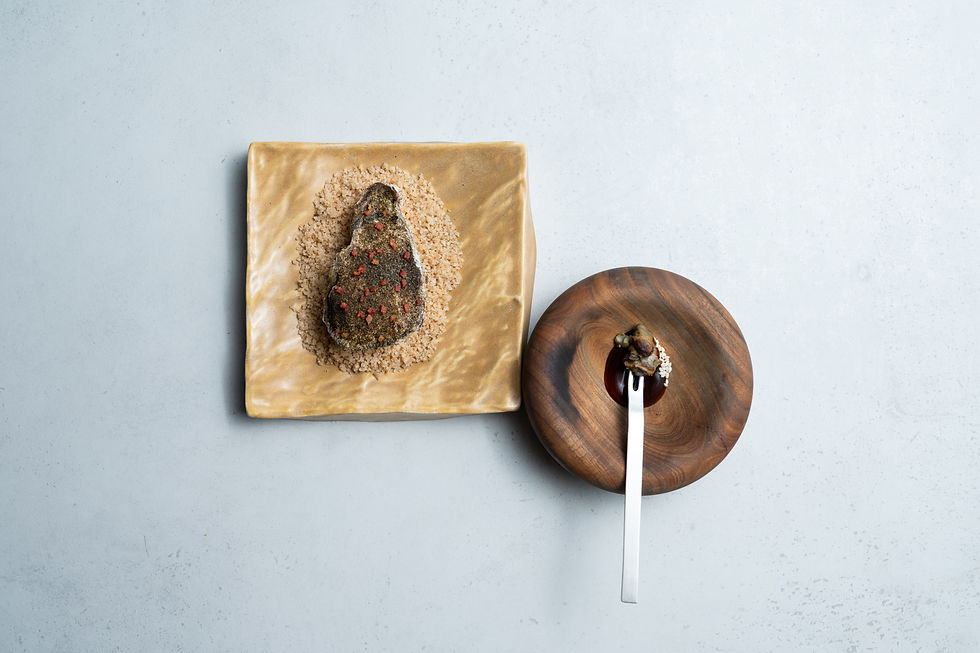
That shift occurred when I came across the book Brae, detailing the work of the restaurant in Melbourne. I was fascinated by their radical approach to oysters as ice cream. Inspired, I set out to create my own version, blending the robust Kochi oysters with the saline depth of kelp from Rameshwaram. To contrast the cold, oceanic cream, I needed a counterpoint of heat and texture. I developed a Pandi kari crumble for a spicy, fatty crunch, paired with the concentrated bite of charred oyster meat. To finish, I applied a glaze made from the mushrooms of Fungamental in Bangalore, adding a layer of deep umami that anchored the entire dish.
Reflecting on these chapters—from the sweat of the ship’s kitchen to the markets of France and the estuaries of Kerala—I realize that my relationship with the oyster has been a lesson in restraint and radical curiosity. I have handled thousands of them, dressed them in complex emulsions, and served them as frozen avant-garde creations, yet I always return to that same realization: nature is the ultimate craftsman. Whether I am shucking for a crowd or crafting a complex glaze, I’ve found that the truest way to honor the oyster is to let it speak of the cold, the salt, and the earth from which it came.

Comments